Dogs are sensitive animals that rely on their companions, friends, and surrounding environment. Breed, upbringing, and other factors can influence a dog's behavior and psychology. Combined with other factors such as long working hours for their owners and cramped living spaces, dogs are more prone to behavioral problems.
Dog behavior problems
Dogs are sensitive animals that rely on their companions, friends, and surrounding environment. Breed, upbringing, and other factors can influence a dog's behavior and psychology. Combined with other factors such as long working hours for their owners and cramped living spaces, dogs are more prone to behavioral problems.
Separation anxiety, lightning-induced anxiety, canine aggression, excessive barking, and chewing furniture are the most common serious behavioral problems in dogs.
Other common but less serious behavioral problems include excessive jumping, urinating or defecating indiscriminately at home, begging for food, or seeking attention. Sometimes, owners unintentionally encourage these behaviors, such as secretly giving them things under the table or failing to follow a training plan.
While behavioral problems are generally not considered medical issues, correcting these behaviors is equally important. Often, gentle training methods, combined with appropriate treats and toys to distract the dog and rewarding it at the right time, can help reduce behavioral problems over time.
Behavioral problems can become deeply ingrained, and once they become habits, they can be quite difficult to address. Many of these problems can be prevented through good socialization, training, and a strong bond between owner and pet. Puppy socialization classes and dog meetups are excellent ways to build a dog's confidence and social skills, fostering trust, respect, and understanding.
It's never too late to train your dog. Even if your dog is an adult and the behavioral problems have become habits, there are still many ways to train them. General training, counter-conditioning training, and positive reinforcement are all viable methods.
Finally, if training and behavioral therapy don't seem to help your pet, in some cases, owners can also resort to safe and effective medication. Your veterinarian will be happy to discuss your pet's needs and the feasibility of these medications.
Remember, you can also teach older dogs new tricks.
Are certain dog breeds more prone to behavioral problems?
Guard dogs, such as German Shepherds and Marlene Lagoons, are naturally highly alert and sensitive to their environment. As a result, they are prone to stress and may even exhibit aggressive behavior due to fear.
Protection dogs, such as Rottweilers and Tibetan Mastiffs, have a strong sense of hierarchy and may exhibit aggressive behavior in order to gain a higher status.
Small breeds of dogs, such as Shih Tzus, Poodles, and Pekingese, are usually very affectionate towards their owners and are therefore prone to separation anxiety.
Before getting a dog, it's essential to do your research. Understand the breed and temperament of different dogs, and be aware of potential behavioral issues so you can consider appropriate solutions. However, breed isn't the primary factor influencing temperament; the way the owner interacts with the dog and the training methods have the most profound impact.
Does the Hong Kong lifestyle really exacerbate behavioral problems in dogs?
As a veterinarian, I have indeed observed that dogs in Hong Kong exhibit more significant behavioral problems than dogs in other places, and I believe the main reason for this is closely related to the Hong Kong lifestyle. Living spaces in Hong Kong are relatively small, limiting dogs' opportunities to interact with the outside world and other dogs. I have also seen dogs that have never left home, which causes them to feel anxious and fearful towards strangers and environments, generally exhibiting signs of maladjustment and disorientation.
Hong Kong people are very busy every day and don't have much time to spend with their dogs. I believe owners should spend more time with their dogs, playing with them, taking them for walks, and increasing the interaction between owners and their pets. Owners can also get together more often to share their experiences, and dogs can have more social time.
Furthermore, many Hong Kong families now employ domestic helpers, resulting in dogs spending long hours with someone. Over time, this can lead to dogs developing a fear of being alone. Therefore, when a dog first arrives at a new home, it's important to allow it time to be alone so it won't be too afraid of being alone. Of course, owners should try not to leave their dogs alone at home for extended periods.
Canine separation anxiety
What is separation anxiety disorder?
Separation anxiety is the most common behavioral problem in dogs, characterized by anxiety and restlessness when their owners leave home. Feeling lonely and stressed, dogs may bark incessantly, scratch at doors, hide in the bathroom, or even destroy furniture. Separation anxiety is actually cultivated. For many years, dogs have been considered "man's best friend," but in addition to being loyal companions, they are also pack animals. When separated from their companions for extended periods, dogs will experience loneliness and stress.
How can the owner help it?
There are some good ways to alleviate separation anxiety in dogs.
For any behavioral issues, ensure your dog gets enough exercise, a regular diet and lifestyle, and sufficient interaction time with its owner. Establishing a good foundation, in the long run, will prevent the same problems from recurring. A tired but content dog is always better than a bored dog.
Owners can use various methods to distract their dogs. Before leaving in the morning, make sure your dog has a dental chew or some brain-training toys. Some toys allow owners to put dry food or treats inside, so the dog only needs to use its brain to get a treat while also passing the time. This helps the dog associate your departure with something positive (a new treat or toy). This training method is called counter-conditioning training.
One way to reduce separation anxiety is to lower the level of excitement, thereby reducing anxiety. A dog's emotions fluctuate every time its owner leaves; it may be anxious when its owner leaves and overjoyed when the owner returns in the evening. Therefore, try to minimize these emotional fluctuations. Say goodbye to your dog in a relaxed and easy tone in the morning; greet it calmly when you return home. Of course, to alleviate your dog's separation anxiety, don't ignore it or make it feel unrejected.
Finally, owners can gradually build their dogs' confidence. Start by trying short periods of dummy separation, even just 5 minutes, and then gradually increase the duration of the separation, allowing them to slowly build confidence in being alone.
Anxiety disorder caused by thunder
Anxiety disorder caused by thunderstorms is very common.
For some dogs, nothing seems more terrifying than thunder and lightning. They seem to sense the approach of a storm before it even begins, hiding in closets, under beds, or between their owner's legs.
Thunderstorm anxiety is actually quite common, and the severity varies from dog to dog. The good news is that we can offer owners some advice on how to manage their dog's fear and emotions during thunderstorms.
What can the owner do?
Provide a safe environment
The simplest way is to stay home with your dog, gently patting and comforting them. Give them a safe place to hide, such as their bed, a crate, or next to you. Even dogs with mild anxiety can experience a worsening of their anxiety if they don't receive proper comfort during thunderstorms. Leaving a dog to face the situation alone won't help its anxiety; in fact, it will make it worse. Crates or crates are good hiding places because they mimic caves, and dogs in the wild instinctively seek out cave-like places to hide in times of danger.
Here are some recommended dog mattresses/beds/cages:
Chocolate: Gray floral pet bed
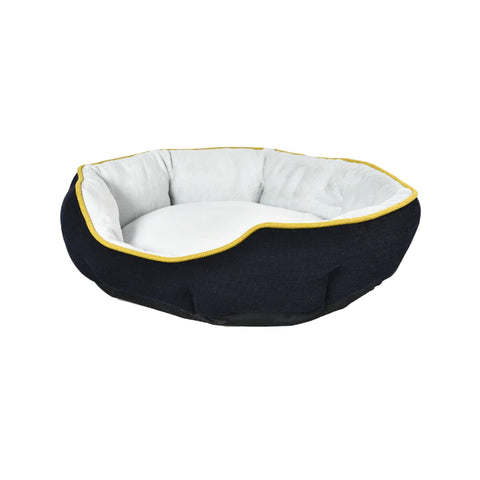
Price: $238.00
- Anti-slip bottom, prevents movement
- The bed edge provides support, and cats and dogs can lie on it as a pillow; the ultra-soft filling relieves joint and muscle pain.
Zeze Zhe Zhe: Checkerboard Ice Nest Green and White Checkered Pattern
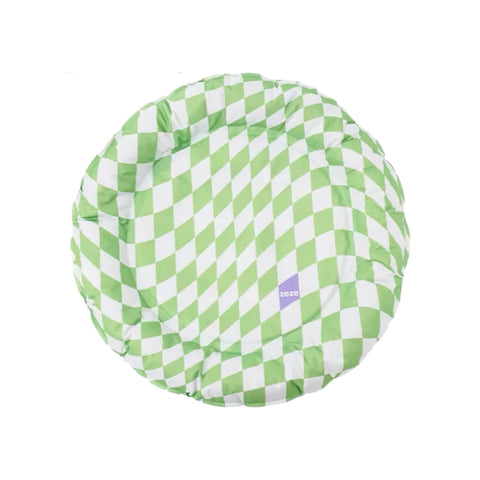
Size: 55x55 cm
Price: $198.00
- Polyester fiber/polymer cooling gel/PP cotton
Dogit: Gray Portable Airplane Cage
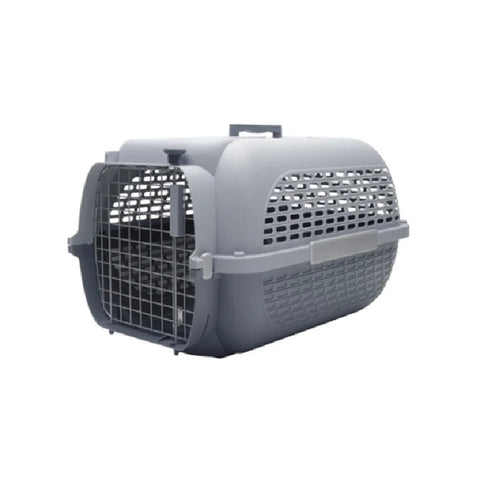
Price: $295.00
- Meets air transport standards
- Four-sided ventilation design prevents stuffiness
- You can open the skylight to soothe your pet.
- Plastic modular transport cage, simple and lightweight
- Easy-to-assemble side-locking system
Counter-conditioning
Reverse conditioning can also be helpful. Try associating thunder and lightning with positive things. During thunderstorms, give your dog its favorite treat—a treat that's only given as a special reward during thunderstorms. This can help gradually establish a connection between thunder and lightning and positive experiences. Of course, staying home and playing with your dog to distract it from the thunder and lightning can also be very helpful. Over time, the dog will become less sensitive to thunder and lightning. Another method is to find some thunderstorm sounds online and play them for your dog on a sunny day, while gently stroking it and giving it treats from time to time, helping to gradually alleviate its mild anxiety.
In some cases, dogs with severe rabies anxiety can be given safe and effective medications as adjunctive therapy. Your veterinarian will be happy to discuss your pet's needs and the feasibility of these medications.
aggressive behavior in dogs
Common types of aggressive behavior
Fear and domineering aggressive behaviors are the most common.
When dogs are placed in an environment that frightens or makes them uncomfortable, they may exhibit aggressive behavior out of fear. Even if the environment seems harmless, a dog may become very tense and anxious simply because a stranger walks by or a motorcycle drives past the house, and may even react suddenly in an attempt to protect itself. A common example is when friends are invited to your home for dinner, and your friend tries to pet your dog, the dog may exhibit aggressive behavior out of fear.
Dominant aggression and fear-induced aggression may seem similar, but they are very different. Dogs are animals with a strong sense of hierarchy; once they have established their territory, they will do their best to protect what belongs to them. Dominant aggression can occur indoors, such as a dog guarding its bed or chair and barking when people approach. However, dominant aggression is more common outdoors. A dog may also exhibit dominant aggression when crossing a fence, seeing other dogs walking, or even from fallen tree bark.
How can I deal with my dog's aggressive behavior?
Before starting any type of training or behavior correction, it's crucial to remember that regardless of whether a dog's aggression stems from fear, dominance, or other reasons, delaying intervention can worsen the problem and even lead to danger. Ensuring your safety and the safety of those around you is also paramount. Here are a few ways to help owners and manage aggressive behavior in their dogs.
For any behavioral problem, the first step is to ensure the dog gets enough exercise, a regular diet and lifestyle, and ample time to interact with its owner. Establishing a good foundation is crucial for long-term well-being and preventing the same problem from recurring. A tired but content dog is always better than a dog that's bored all day.
How can you tell if a dog's aggressive behavior stems from fear or a desire for dominance?
Distinguishing between fear-driven and dominance-driven aggressive behavior is key to determining the appropriate course of action. Before exhibiting fear-driven aggression, a dog will typically crouch down, tucking its legs and ears back against its head, and lowering its tail. Dominance-driven aggression, on the other hand, is characterized by a higher posture, with the tail held high and the back and ears erect and pointing forward.
Dealing with fear-induced aggressive behavior
To help reduce fear-induced aggression in dogs, we must first identify the trigger. Then, gradually help the dog overcome its fear in a calm and controlled environment. Owners should try to focus the dog's attention to prevent sudden, fear-induced aggression. Some dog trainers use loud whistles for focused training, rewarding dogs with treats at appropriate times during training. For dogs with separation anxiety, this is a counter-conditioning training technique, helping them develop more positive experiences. Remember, training is not about scaring the dog. If it starts to feel uncomfortable in its environment, stop training and try again later. If possible, try keeping the dog away from things that frighten it. For example, if the dog is afraid of invited guests, the owner can try to show that the guests are just friends and pose no threat. If the dog is still afraid, the owner can ask the guests to leave for a few minutes until the dog's emotions return to normal, then invite the guests back, but ask them to avoid eye contact or trying to touch the dog.
Addressing aggressive behavior stemming from a dominance mentality
Dominance-driven aggression is less common than fear-induced aggression, but it is more dangerous. Be cautious with dogs exhibiting dominance, and we generally advise owners to consult with a veterinarian or professional trainer before starting any training program to discuss a suitable approach. Dogs with a dominant personality often believe they are superior to other family members. I would not recommend directly challenging the dog's authority, as this will make the dog perceive it as a challenge to its status and trigger aggressive behavior. Instead, I would suggest a gradual approach, trying to change the hierarchy within the home.
Whenever your dog wants something, first give it a command. This method subtly establishes your superior status in the home by requiring it to obey your instructions before rewarding it. For example, instruct your dog to sit before dinner or a walk; ensure it eats in its own designated area and not near the dining table; and don't give your food to the dog at dinner. Finally, designate areas where the dog is not allowed to roam, such as sleeping on your bed or chair. These practices reinforce the idea that the dog is not the master of the house. Of course, I would recommend that dogs have their own sleeping area to provide a sense of belonging and security. Furthermore, everyone in the household should have a higher status than the dog, including caregivers and other family members, and every family member should participate in training.
Finally, I also recommend that owners prepare masks. Make sure your dog wears a muzzle when going out or in potentially dangerous situations. Even if the chance of your dog biting someone is very small, ensuring everyone's safety is paramount.
Excessive barking in dogs
A dog barking a few times is normal communication and shouldn't be a reason for being scolded. Normal and appropriate reasons for barking include warning, alerting, playing, and expressing needs. However, some reasons are less acceptable, including fear, seeking attention, or boredom.
If a dog barks incessantly without a specific reason, the owner should try to correct its behavior. Otherwise, the barking will worsen over time and become more difficult to resolve; therefore, training should begin before the barking becomes a serious problem.
How to reduce barking by your dog indoors?
First, teach your dog the command "Quiet," and all family members should use the same word. When your dog barks at the door, the owner should approach and say "Quiet" after a few seconds. If the dog continues to bark, the owner should say "Quiet" again, then gently hold the dog's muzzle for a few seconds before releasing it. If it starts barking again, the owner should repeat the above steps. When it remains silent for 15 seconds, the owner should praise it or give it a treat.
Regarding praise, owners should be careful when praising their dogs. Often, when we inadvertently praise a dog for misbehaving, the dog may mistakenly believe that the owner is encouraging the incorrect behavior. If an owner pats a dog to calm it down or says "good boy" while it's barking or howling, the dog will interpret this as approval of the barking and will likely bark even more in the future. Therefore, wait at least 15 seconds after the dog stops barking before praising it, allowing them to understand what the correct behavior is.
Sometimes, dogs bark at home due to boredom or anxiety. The first step is to tire the dog out before you leave. The best way to do this is to take it for a walk in the morning and then feed it. It will feel more relaxed after eating. Give the dog a treat or toy just before you leave to reduce boredom. There are many educational toys that allow owners to put dry food or treats inside plastic toys. These toys serve two purposes – first, they keep the dog occupied; second, while playing with the toy, the puppy develops a positive experience of receiving a treat. Some people leave the radio or TV on before leaving to help reduce the dog's anxiety when the owner leaves. If the dog continues to bark excessively, I would recommend desensitization training – start with short periods of dummy absence, even just 30 seconds, and gradually increase the length of absence to help them build confidence in being alone.
The last option is to use a shock collar. These collars deliver a micro-shock to the dog when it barks. However, I would advise against using these collars if possible, as they are a poor training method. But if the barking becomes increasingly severe and all other methods have been tried, the owner can use these collars for short periods as a start to training.
How can I reduce my dog's barking outdoors?
The best way to prevent this behavior is to start controlling it before it starts barking. If you find that your dog's barking is triggered by another dog approaching, you should first have your dog sit and focus its attention on you. After calming down, comfort and pat it gently. Once the other dog leaves, do not reward your dog immediately; this is called counter-conditioning training, and its purpose is to prevent your dog from associating barking with a reward. If the dog barks, use control commands such as "Quiet." If it continues to bark, you can hold the dog's muzzle for a few seconds and then gently release it. If it barks again, repeat the above steps. This training takes time, but with time and repeated practice, this type of training is very effective.
Remember not to praise or pat it when it's barking!
How to stop dogs from chewing furniture
One of the most frustrating problems when owners come home is that their dogs have chewed up furniture, shoes, or other important items. This chewing is often caused by separation anxiety and boredom.
Of course, chewing is a natural and normal behavior, especially during the teething stage in puppies. They should be allowed to chew on appropriate things. This is important for their dental development, but we need to teach them what they can and cannot chew.
There are many good toys and products on the market that can distract puppies and teach them that chewing toys is more fun than chewing slippers.
Feeding them dry dog food, chew toys, and treats can reduce their tendency to chew on furniture and give them some jaw exercise.
Click here to browse a range of dry puppy foods .
Here are some recommended dry puppy foods:
Royal Canin (France): Small breed puppy food for 2-10 months

Sizes: 2kg/4kg/8kg
Price: $168.00 / $292.00 / $502.00
- Large dogs are defined as dogs that weigh between 26 and 44 kilograms when fully grown; their powerful working abilities have been praised for a long time.
- Large breed puppy food uses rice as the primary starch source and is fortified with probiotics, fructooligosaccharides (FOS), beet pulp, and flax hulls and seeds to improve the gut microbiome, enhance intestinal digestive tolerance, and ensure optimal digestive safety.
- This large breed puppy food has an appropriate energy content (3948 kcal/kg) and a high protein content (32%), ensuring ideal growth and development while preventing obesity. It features a balanced calcium-to-phosphorus ratio and very high levels of chondroitin and glucosamine to protect joints. It also contains a synergistic antioxidant complex (vitamin E, vitamin C, lutein, taurine) exclusively developed by Royal Canin.
Royal Canin (French Royal Canin): Medium-sized puppy food

Size: 4kg
Price: $272.00
- Medium-sized dogs are defined as dogs that weigh between 11 and 25 kilograms when fully grown. There are 137 officially recognized medium-sized dog breeds by the World Canine Organization.
- Medium-sized puppy food is fortified with Royal Canin's exclusive synergistic antioxidant complex (vitamin E, vitamin C, lutein, taurine) and oligosaccharides to help build up the puppy's own immune system.
- It contains high energy (4288 kcal/kg) and high protein (32%), fully meeting the needs of medium-sized puppies in their peak growth period.
- Using highly digestible protein LIP, reducing starch content (25%), and adding fructooligosaccharides (FOS) and beet pulp to improve the gut microbiota and ensure optimal digestibility and safety. A balanced calcium-to-phosphorus ratio ensures strong and healthy bones and teeth.
Advance: Daily Care Small Breed Puppy Food
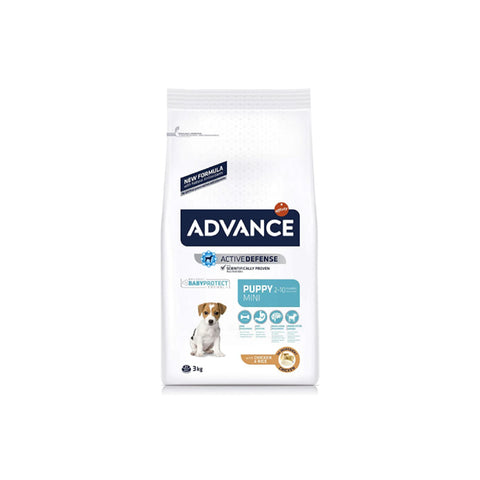
Size: 1.5kg
Price: $115.00
- With chicken and rice as its main ingredients, it is an excellent source of easily digestible protein and carbohydrates.
- Optimal calcium-to-phosphorus ratio and vitamin D are essential for healthy bone growth and development.
- Omega-3 fatty acids help with the healthy development of the central nervous system, learning processes, and vision.
- Active immunoglobulins, nucleotides, and high protein content support a puppy's natural defenses.
Finally, putting away shoes or any important items is also a strategy. Sometimes puppies just want to chew on things, but if shoes are put away or kept away from them, this may reduce their chewing behavior.
The above content was provided by Dr. David Gething.